
Insights
Language access, explained
Practical guides on certified translation, interpreting, and compliance, from the team at MultiLingual Technologies.

When a Translation App Is Enough, and When You Need a Person
Machine translation handles more than it used to. Here is where it still falls short, what a human interpreter actually adds, and…
Read article →
NBCMI Certification Requirements: CMI, Hub-CMI, and What Each One Needs
The National Board of Certification for Medical Interpreters, NBCMI, issues one of the two national medical interpreter certifications in the United States.…
Read article →
CCHI Certification Requirements, Explained in Plain Language
The Certification Commission for Healthcare Interpreters, CCHI, is one of the two organizations that issue national medical interpreter certification in the United…
Read article →CCHI vs NBCMI: How to Choose a Medical Interpreter Certification
CCHI vs NBCMI: eligibility, exam formats, oral exam languages, fees, renewal, and the 2027 CoreCHI change. Both start with 40 hours of…
Read article →Medical Interpreter Certificate vs Certification: What Each One Proves
A training certificate documents your 40 hours. Certification comes from CCHI or NBCMI after their exams. What each is for, and the…
Read article →
The 40-Hour Medical Interpreter Training Requirement, Explained for Bilingual Healthcare Workers
The 40-hour medical interpreter training requirement, explained: who sets it, what counts, the state exceptions, and how to meet it online.
Read article →
How to Choose an Over-the-Phone Interpreting (OPI) Provider
The questions to ask before choosing an OPI provider.
Read article →
Chinese, Japanese, and Korean: What CJK Translation Really Involves
Chinese, Japanese, and Korean are not interchangeable.
Read article →
Transcreation vs. Translation: When Your Message Needs More Than Words
Translation carries your words; transcreation carries your intent.
Read article →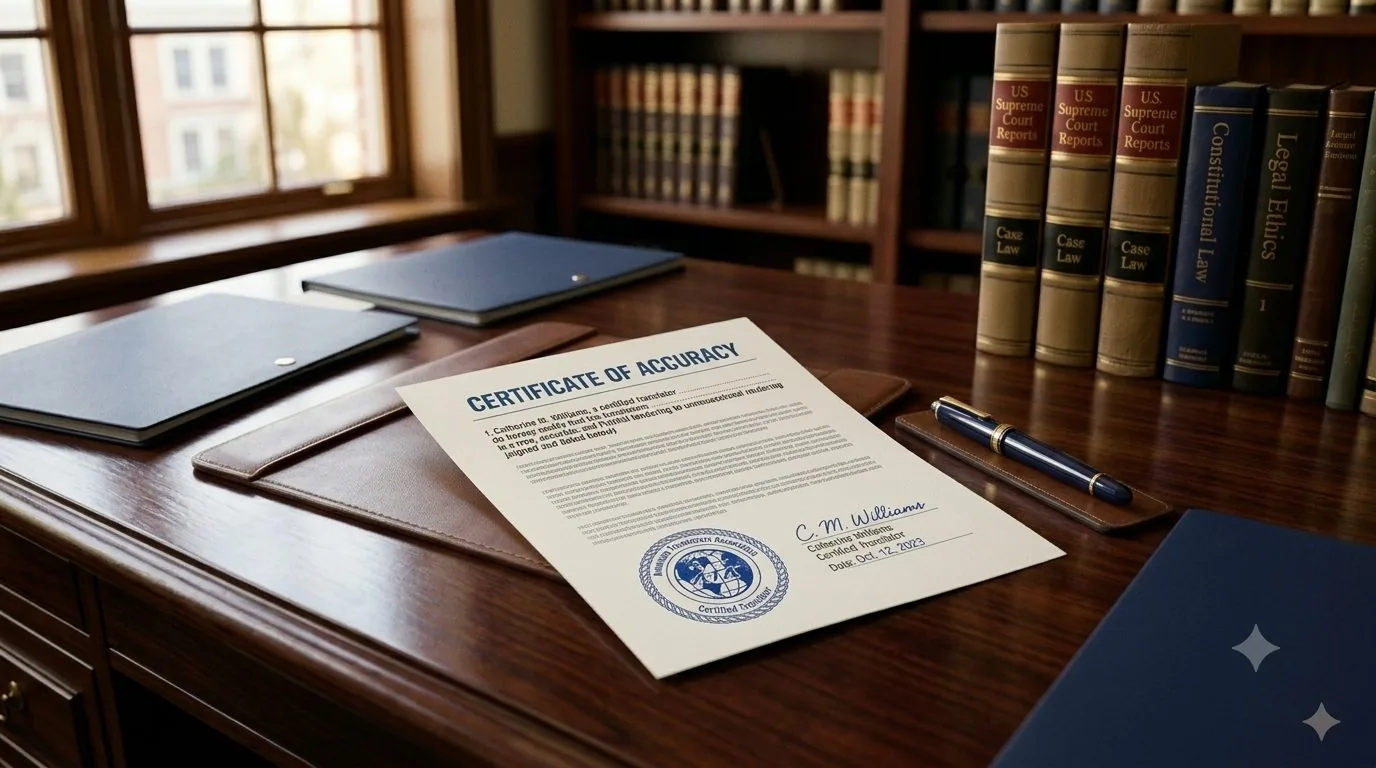
What Makes a Legal Translation Court-Ready?
A court-ready legal translation pairs a complete, accurate rendering with a signed Certificate of Accuracy, prepared to meet court and agency requirements.
Read article →
OPI, VRI, or On-Site: How to Choose the Right Interpreting
Phone, video, or in-person interpreting? Learn the strengths and tradeoffs of each modality and how to choose the right one for every…
Read article →
Healthcare Language Access: What Section 1557 and Title VI Require
Federal law requires healthcare providers to give limited-English patients meaningful access through qualified interpreters and translated vital documents.
Read article →