
Industries · Legal
Court-ready translation and interpreting for legal teams.
Certified translation of legal documents and professional interpreting for depositions, hearings, and proceedings: accurate enough to be admissible, secure enough for privileged matters, from certified linguists with 20+ years in the field.

Legal language services cover two distinct needs: certified translation of documents that have to be filed or admitted as evidence, and interpreting for spoken proceedings like depositions and hearings. Each carries a signed or oath-bound standard of accuracy, and both demand confidentiality for privileged material.
Why it matters
In a legal matter, the translation is part of the record
Two things make language work in law non-negotiable, and both carry real consequences.
Accuracy decides admissibility
Foreign-language evidence, contracts, and filings are only usable in a U.S. court with a certified translation, and a single mistranslated term can change what a document means, whether it's privileged or responsive, or how testimony is understood. Errors get evidence excluded, delay matters, and change outcomes.
Confidentiality is not optional
Legal matters carry privileged material, trade secrets, and sensitive personal data. An unsecured file or a careless vendor can waive privilege and breach a protective order. Every project is handled by NDA-bound linguists under encryption and access controls.
Source: Administrative Office of the U.S. Courts (FY2013-FY2016).
Built for the record
The standards legal language work runs on
We don't just translate and interpret, we deliver work that holds up in a filing, a deposition, and under a protective order.
Court-admissible certified translation
U.S. courts and USCIS require a certified English translation for any foreign-language document filed or entered as evidence. Each of ours carries a signed Certificate of Accuracy.
Interpreter oath & qualification
A court interpreter must be qualified and take an oath to interpret truly and accurately, the standard we hold every judiciary interpreter to.
Court-certified interpreters
Where a proceeding requires it, we field interpreters who meet federal and state court certification criteria, in the languages where certification exists.
NAJIT standards
Our judiciary interpreters work to the ethics and accuracy standards of NAJIT, impartial, accurate, and bound to confidentiality.
Sworn & admissible documents
Translated documents entered as evidence are backed by the translator's affirmation of accuracy, notarized where a jurisdiction requires it.
Confidential & secure
NDA-bound linguists, encryption, secure file transfer, and access controls protect privileged material and honor protective orders.
Requirements referenced: USCIS certified-translation rule (8 CFR 103.2(b)(3)) · Federal Rule of Evidence 604 · Court Interpreters Act (28 U.S.C. §1827) · NAJIT.
What we provide
Certified translation and court interpreting
The two things a multilingual matter needs, documents that file cleanly, and interpreters who hold up in the room.
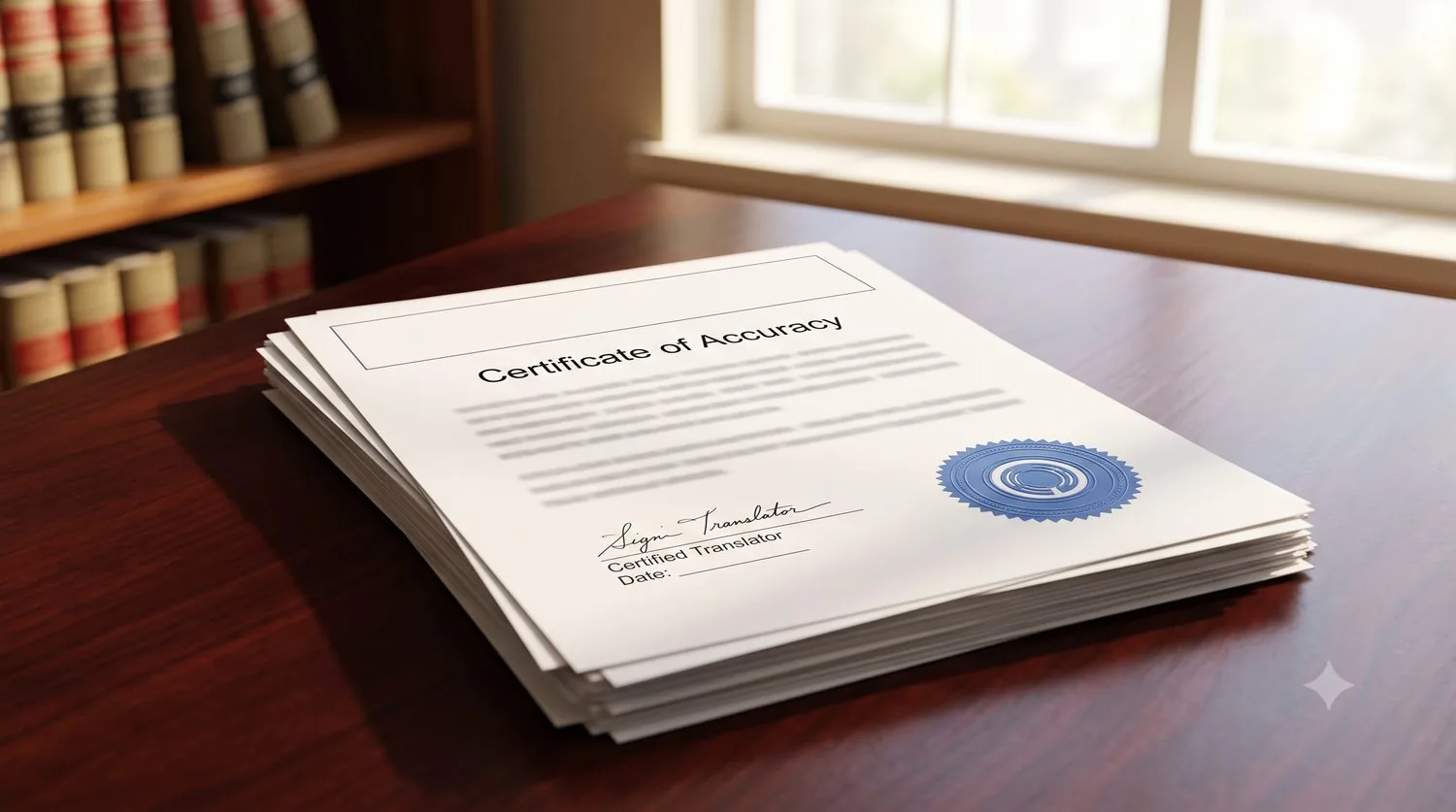
Certified legal translation
Certified, court-ready translations of the documents your matter turns on, each with a signed Certificate of Accuracy.
- Contracts, pleadings, discovery & evidence
- Signed Certificate of Accuracy for filing
- Legal subject-matter linguists & translation memory
- Notarization & apostille on request
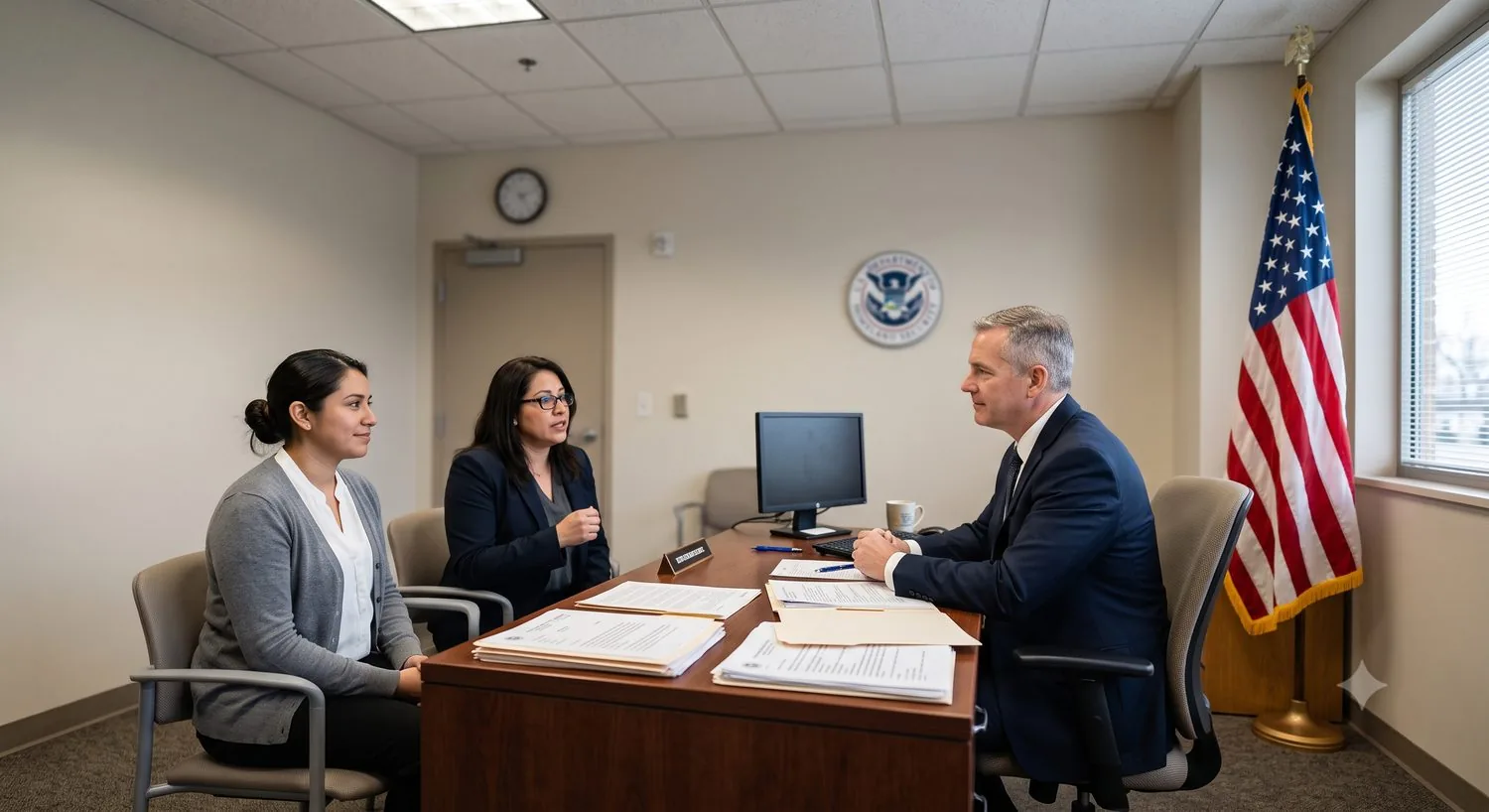
Court & deposition interpreting
Interpreters for the moments that matter, depositions, hearings, arbitrations, and examinations under oath.
- Depositions, hearings, arbitrations & EUOs
- On-site, over-the-phone & video remote (VRI)
- Consecutive & simultaneous modes
- Court-experienced, NDA-bound interpreters
What we handle
Documents and matters, across the practice
From a single certified exhibit to multilingual document review at litigation scale.
- Pleadings, motions & briefs
- Deposition transcripts & interpreting
- Evidence & exhibits
- Foreign-language e-discovery & review
- Contracts & agreements
- NDAs & terms of service
- M&A & due-diligence documents
- Governance & compliance materials
- Patents & patent filings
- Trademark documents
- Foreign-filing translation
- IP-portfolio management
- Immigration filings & support
- Regulatory & compliance submissions
- Birth, marriage & police records
- Affidavits & declarations
Handling a high-volume matter? We scale multilingual document review with language ID and relevance/privilege support, just ask when you request your quote.
Matter on a deadline?
Talk through your filing or proceeding with a legal-language specialist, no obligation, or see exactly how our pricing works.
Why MLT
Why legal teams choose us
Certified & court-ready
Every certified translation ships with a signed Certificate of Accuracy that meets court and agency requirements.
Secure & privilege-aware
NDA-bound linguists, encryption, and secure handling built for confidential and privileged matters.
One partner, end to end
Translation, certification, interpreting, and notarization/apostille under one team, across languages and volumes.
Technology we build
InterpretManager and CertiDoc give you speed and scale without trading away the accuracy legal work demands.
Which do you need?
Certified translation vs. court interpreting
| Certified translation | Court interpreting | |
|---|---|---|
| For | Documents, evidence & filings | Depositions, hearings & proceedings |
| Delivers | A signed Certificate of Accuracy | Real-time spoken interpretation |
| Standard | Court-ready written record | Qualified, oath-bound interpreter |
Court-ready, defined
What makes a legal translation court-ready
Certified for filing
A complete, accurate translation with a signed Certificate of Accuracy the court and opposing counsel can rely on, the standard for exhibits, filings, and evidence.
Handled for privilege
Confidential treatment of privileged material: NDAs, access limited to the assigned linguist, and secure handling across the matter.
Bottom line: court-ready means both, accuracy you can certify and confidentiality you can defend.
Legal FAQ
Questions legal teams ask
A certified translation includes a signed statement, a Certificate of Accuracy, from the translator attesting that the translation is complete and accurate. U.S. courts, USCIS, and agencies require one for foreign-language documents; notarization is added where a jurisdiction asks for it.
Yes. Each translation is delivered with a signed Certificate of Accuracy that meets the requirements of U.S. courts, USCIS, and government agencies. Notarization and apostille are available where required. (Admissibility itself is always the court's decision, we make the translation court-ready.)
Yes. We field interpreters experienced in courtroom, deposition, arbitration, and administrative proceedings, working to NAJIT and court-certification standards, on-site, over the phone, and by video remote, in both consecutive and simultaneous modes.
Every linguist works under an NDA, and we use encryption, secure file transfer, and access controls so privileged and sensitive material stays protected end to end, consistent with protective orders and your firm's data-handling requirements.
Yes. We support multilingual discovery and e-discovery, including language identification and relevance/privilege review support, and use translation memory to keep terminology consistent and costs down across high-volume matters.
Yes. We provide notarized translations and coordinate apostille certification for documents used in Hague Apostille Convention countries, alongside the certified translation.
Our court uses their virtual platform for juvenile intake and civil protection order hearings, as well as for scheduling future courtroom sessions. They provide interpreters for hard-to-find languages, communicate efficiently, and offer a user-friendly system.
Shannyn K. · Court services, MLT client
One US-based partner for interpreting, certified documents, and AI-assisted translation, verified by professional human linguists.
Court-ready, in every language.
Send us your documents or tell us about your matter, you'll get a clear, itemized quote, usually within one business day.