
Certified Translation
Does USCIS Require a Certified Translation? What the Rules Actually Say
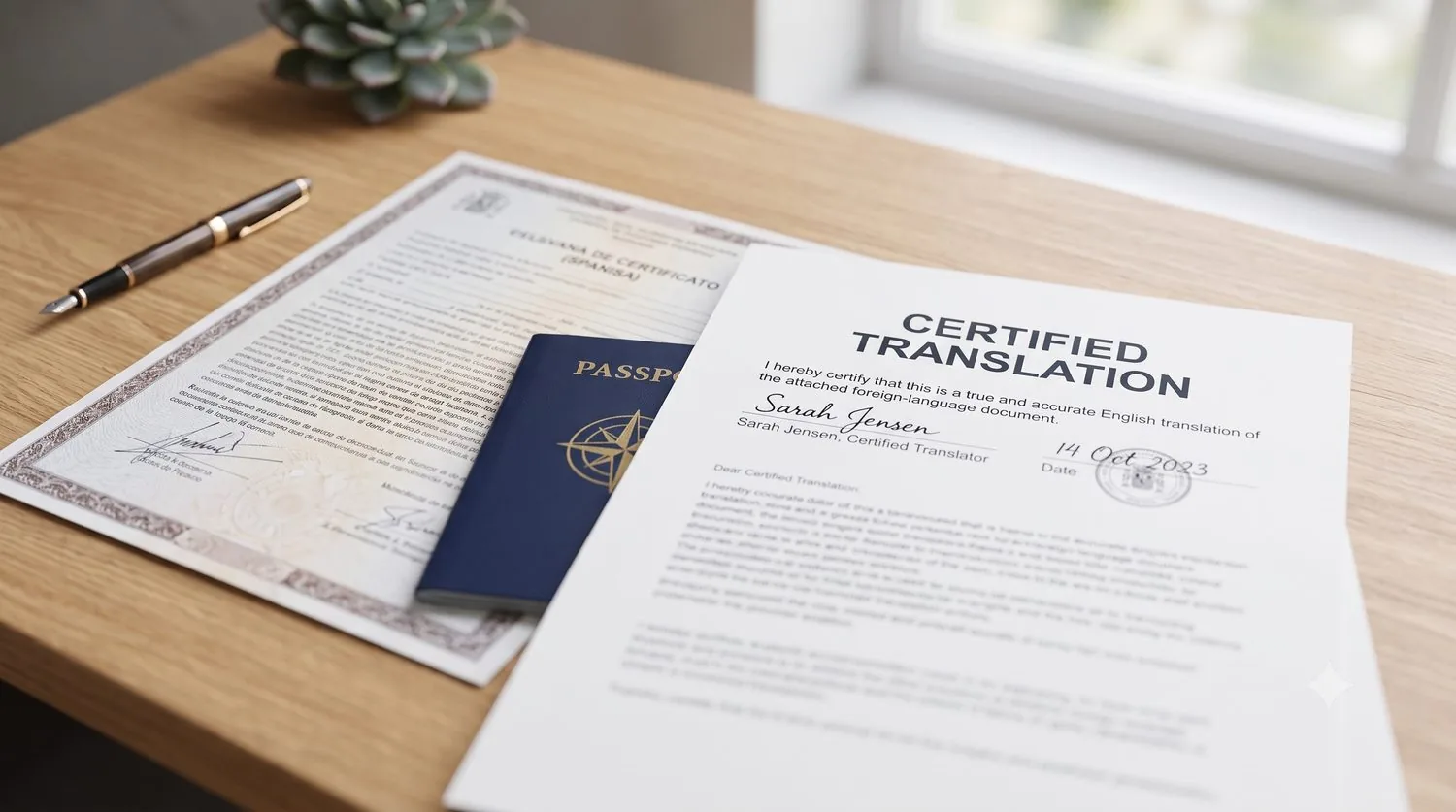
Yes. Any document you file with USCIS that is not in English must include a full English translation, and the translator must certify that the translation is complete and accurate and that they are competent to translate from the foreign language into English. This requirement comes directly from federal regulation at 8 CFR 103.2(b)(3). Notarization is generally not required.
What does USCIS actually require?
The rule is short and specific. Under 8 CFR 103.2(b)(3), any foreign-language document submitted to USCIS must be accompanied by a full English translation. The person who prepared the translation must certify, in writing, two things: that the translation is complete and accurate, and that the translator is competent to translate from the source language into English.
That is the entire legal standard. There is no requirement that a translation come from a government-approved agency, and USCIS does not maintain an official list of “approved” translators. What matters is that the translation is faithful to the original and that a signed certification statement accompanies it.
This is why the term certified translation can be confusing. It does not mean the translator holds a specific license. It means the translator has signed a formal statement of accuracy and competence. That signed statement is what makes the translation “certified” in the eyes of USCIS.
What goes into a compliant certification statement?
A certification statement that meets USCIS requirements typically includes:
- A declaration that the translation is complete and accurate
- A statement that the translator is competent to translate from the foreign language into English
- The translator’s full name and signature
- The translator’s contact information
- The date of the certification
The statement is usually attached to the translated document, along with a copy of the original foreign-language document, so the reviewing officer can compare the two. Every stamp, seal, and handwritten note on the original should be accounted for in the translation, even if it is only marked as “illegible.”
Which documents commonly need a certified translation?
If a supporting document was issued in a language other than English, it will generally need a certified English translation. The documents that come up most often in immigration filings include:
- Birth certificates
- Marriage certificates and divorce decrees
- Academic records, diplomas, and transcripts
- Police records and court documents
- Passports and national identity documents (when a translation is requested)
- Medical records and vaccination records
- Bank statements and financial affidavits
This matters to a large share of the country. About 1 in 5 US residents, roughly 67.8 million people, speak a language other than English at home, according to the US Census Bureau’s 2019 American Community Survey. Many of them will need translated records at some point in a green card, citizenship, or family petition.
Does USCIS require notarization?
Generally, no. USCIS requires certification, not notarization. These are two different things, and confusing them is one of the most common mistakes applicants make.
Certification is the translator’s signed statement about the accuracy of the work. Notarization is a separate step in which a notary public verifies the identity of the person signing a document. A notary does not review the translation for accuracy and adds nothing to its validity for USCIS purposes. Unless a specific instruction or a particular office asks for it, a notarized signature is not part of the standard USCIS requirement.
Why do certified translations get rejected?
Translations are usually returned or questioned for avoidable reasons rather than deep linguistic problems. The most common issues include:
- A missing or incomplete certification statement
- Partial translations that skip stamps, seals, marginal notes, or the back of a document
- Formatting that does not visibly correspond to the original layout
- Names, dates, or places that do not match other documents in the file
- Machine translation submitted without human review or certification
- Illegible source scans that make an accurate translation impossible
A careful, human-verified translation avoids nearly all of these. At MultiLingual Technologies, translations are prepared by human linguists and reviewed to meet USCIS requirements. Final acceptance always rests with the reviewing officer, but a complete, properly certified translation removes the most common reasons for delay.
How long does a certified translation take?
Turnaround depends on the length and complexity of the documents, the language pair, and how legible the originals are. A single birth certificate moves quickly, while a full academic transcript or a stack of court records takes longer. If you have a filing deadline, share it up front so the timeline can be planned around it. We are happy to give you a clear estimate before any work begins.
With more than 20 years of experience and support for over 300 languages, our US-based team handles immigration translations every day. As an ATA member firm, we hold our work to professional industry standards. Call us at 408-970-9586 or contact us for a free quote and we will tell you exactly what your filing needs.
Frequently asked questions
Does the translator have to be certified or licensed?
No. USCIS does not require a licensed or “certified” translator. It requires a signed certification statement in which the translator attests that the translation is complete and accurate and that they are competent to translate. Any competent translator who can make that attestation can prepare the translation.
Can I translate my own documents for USCIS?
It is strongly discouraged. While the regulation focuses on competence rather than a specific credential, translations prepared by the applicant or a close relative are more likely to be viewed as biased or unreliable. Using an independent, professional translator reduces that risk and keeps your filing clean.
Do I need to send the original documents?
Usually no. USCIS typically wants a copy of the foreign-language original together with the certified English translation, not the physical original. Keep your originals safe unless an officer specifically requests them. Always follow the exact instructions on your form and notice.
Need certified translation or interpreting?
Tell us what you need and we’ll send a clear, no-obligation quote, usually within one business day.
Get a free quote