
Uncategorized
Reflections from the 2025 Ohio Court Technology Conference: AI, Ethics, and the Future of Language

Where Innovation Meets Access to Justice
On April 22, we attended the 22nd Annual Ohio Judicial Conference Court Technology Conference at the Nationwide Hotel & Conference Center in Lewis Center, Ohio. This one-day event brought together judges, court administrators, IT professionals, and legal experts from across the state to explore how technology is reshaping the legal system.
The conference focused on sustainable innovation and lasting improvements in court services and access to justice. As the only language service provider among the vendors, we at Multilingual Technologies, Inc. were honored to contribute to discussions that addressed emerging technology and emphasized responsible implementation, particularly concerning language access.
The Role of AI in Interpretation and Translation
The day began with a plenary session titled “Artificial Intelligence in Interpretation & Translation.” This session explored the expanding role of AI in courtroom interpretation, including live speech recognition and automated translation support tools.
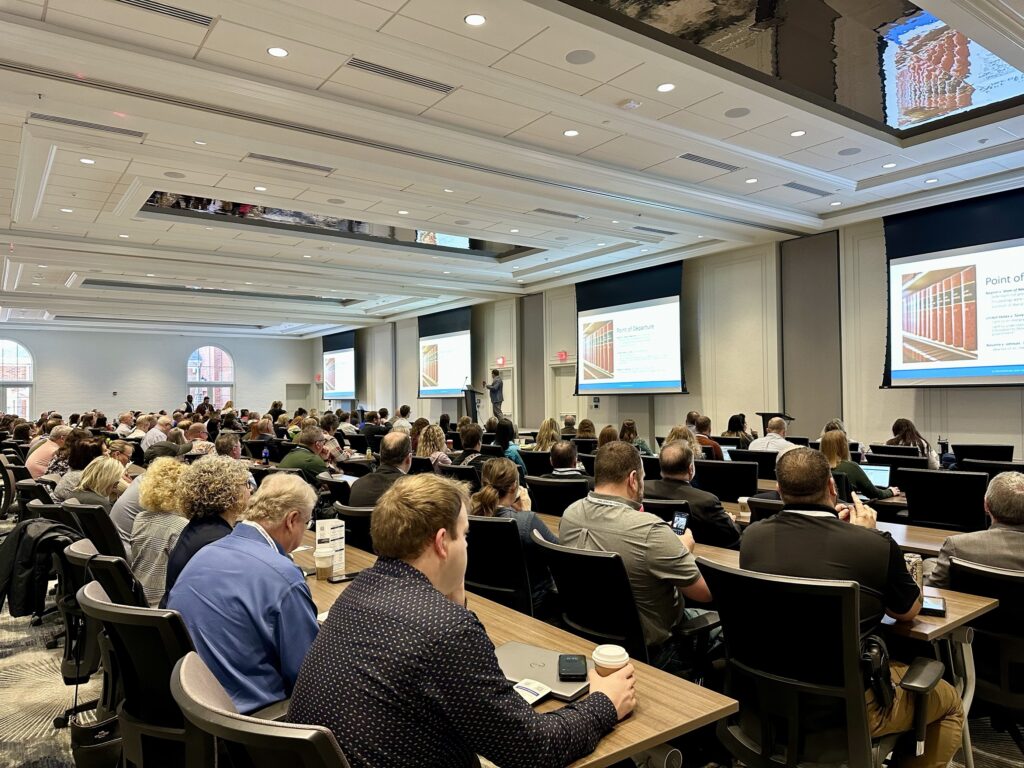
As a company deeply invested in interpreter quality and training, we appreciated the session’s central message: AI should support, not replace, professional interpreters. While AI has made significant strides in speeding up transcription and translation of courtroom speech, it still falls short in areas requiring human judgment, such as legal nuance, cultural sensitivity, and real-time decision-making.
“AI should support, not replace, professional interpreters.”
Throughout the day, we engaged with several court officials who shared our perspectives on AI in language services. They, like us, see the potential of AI to streamline workflows and reduce costs, but also recognize that courtroom communication must remain precise and human-centered. AI can assist with routine tasks, but only a trained interpreter can capture the intention behind the words.
Building Trust in AI-Powered Transcription
A standout workshop was led by the Lawrence County Common Pleas Court, focusing on AI-generated court transcripts. Their pilot project showcased real-time speech-to-text tools that courts are beginning to use to supplement or accelerate transcription.
The results were promising, with hearings transcribed in minutes rather than days. However, the message was consistent: AI cannot work alone. Every transcript still requires human review and correction. We found it encouraging to see courts actively experimenting with this technology while staying grounded in the need for quality control and legal accountability.
We were particularly interested in how this kind of AI could benefit interpreters. Accurate transcripts provide interpreters with better reference material before and after proceedings. AI-enhanced transcription, when implemented correctly, could help us prepare more efficiently and ensure better language access outcomes.
Remote Interpreting and the Digital Courtroom
Another major theme at this year’s conference was the evolution of digital courtrooms. Sessions covered various topics, including case management automation, online payment systems, and paperless workflows. What caught our attention most was the strong interest in remote interpreting platforms.
We had the opportunity to demonstrate our secure virtual interpreting capabilities to several court administrators exploring solutions for hard-to-fill language pairs and rural coverage gaps. The feedback we received validated what we’ve observed over the past few years: remote interpreting, when implemented correctly, is not only effective but essential.
The COVID-19 pandemic accelerated the adoption of remote tools in many courts. At the conference, it was evident that these tools are becoming permanent fixtures. Courts are considering long-term integration of remote services, focusing on secure implementation, preservation of interpreter-client confidentiality, and ensuring equal access across geographic and economic lines.
These are questions we’ve been addressing in our own service model, and it was rewarding to see them being discussed at the state level.
Ethics and Accountability in Language Technology
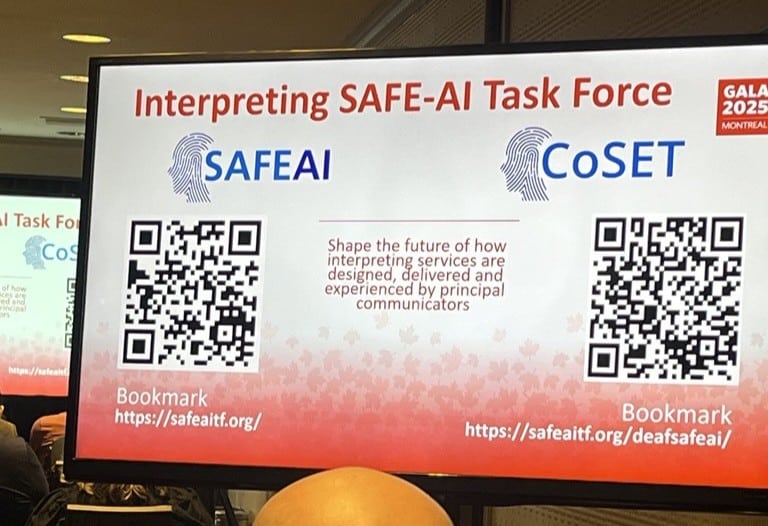
A significant theme throughout the conference was the emphasis on ethics. In every session discussing AI, questions of bias, confidentiality, and due process were raised.
We were pleased to see that many judges and technologists share our view that AI must be subject to rigorous oversight. There is a growing understanding that while these tools are powerful, they are only as good as the data they are trained on. For non-native speakers and marginalized communities, AI errors are not just technical problems; they are justice issues.
That’s why we advocate for a hybrid model. Technology should enhance our work, not diminish the human element. It can help reduce administrative burdens, improve turnaround times, and support consistency, but it must be deployed thoughtfully. Accuracy, cultural context, and ethical responsibility remain human responsibilities.
Our Role at the Conference
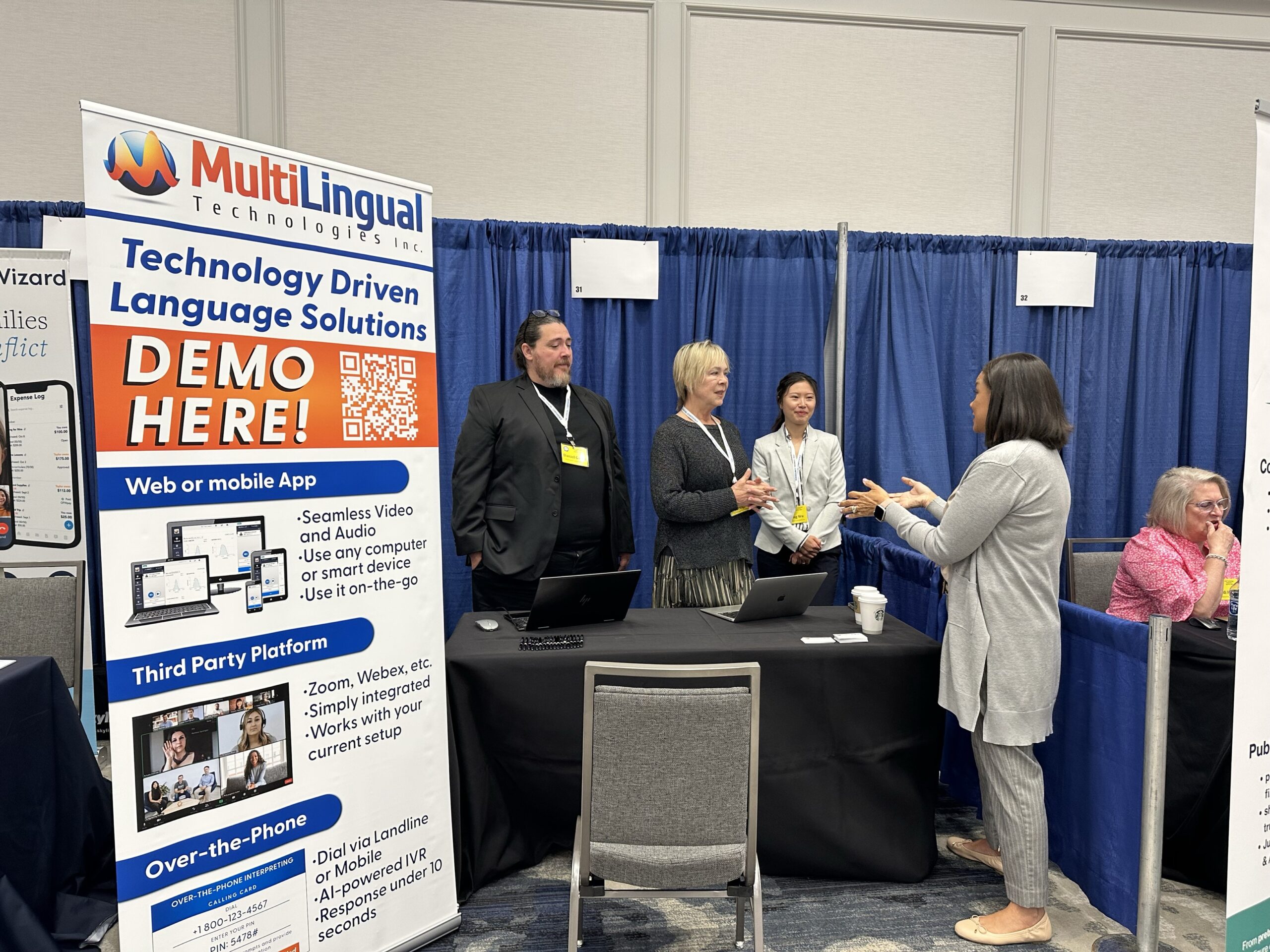
As the only language services company at the conference, we took our role seriously. We were there to listen, share insights, and help shape the discussion around what ethical, effective language access should look like in a technology-driven court system.
From engaging with clerks in small counties seeking cost-effective access to interpreters for less common languages, to discussing with judges how to evaluate AI-generated translations, we were reminded of the essential nature of our work. Language access is not an afterthought; it is central to fair trials, informed consent, and community trust in the courts.
We left the conference with new ideas, partnerships, and a renewed commitment to staying at the forefront of responsible innovation in our field.
Looking Ahead
Technology is advancing rapidly. We believe that its success in the justice system will depend not on how quickly it is adopted, but on how wisely it is implemented.
We are grateful to the Ohio Judicial Conference for facilitating these important conversations and for including language access in their vision of a modern court system.
As we look ahead, we will continue working closely with public institutions to ensure that as courts become more efficient, they also become more inclusive. Whether through AI-supported workflows, remote interpreting, or ethics-first implementation, we are committed to supporting the next chapter of access to justice, ensuring that no one is left behind because of the language they speak.
Need certified translation or interpreting?
Tell us what you need and we’ll send a clear, no-obligation quote, usually within one business day.
Get a free quote